






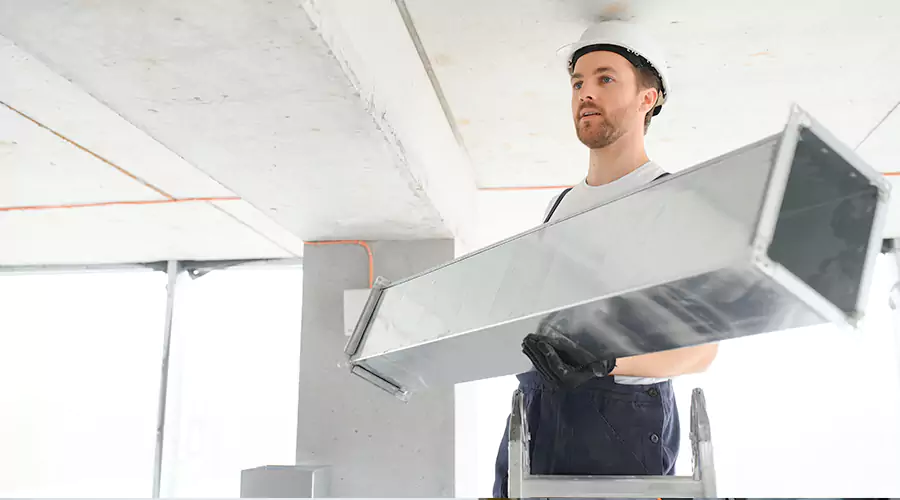
Air ducts are an important part of your HVAC system because they move heated and cooled air throughout your home. When the ductwork is damaged, leaking, disconnected, or poorly designed, your home may feel uncomfortable even when the HVAC system is running. You may notice weak airflow, uneven temperatures, high energy bills, dust around vents, or musty odors.
When duct problems happen, many homeowners are not sure whether they need air duct leak repair or full air duct replacement. The right choice depends on the age of the ductwork, the type of damage, the location of the problem, and how well the system is performing.
Understanding the difference between repair and replacement can help you make a better decision and avoid spending money on the wrong solution.
What Is Air Duct Repair?
Air duct repair focuses on fixing specific damaged areas of the duct system. This may include sealing leaks, reconnecting loose ducts, replacing small damaged sections, fixing crushed flexible ducts, repairing insulation, or sealing gaps around joints.
Repair is often the best option when the ductwork is mostly in good condition but has a few problem areas.
Air duct repair may include:
- Sealing duct leaks
- Reconnecting loose duct sections
- Replacing torn flexible duct sections
- Fixing crushed or sagging ducts
- Repairing damaged duct insulation
- Sealing gaps at joints and seams
- Fixing vent connections
- Improving airflow to specific rooms
Repair can help restore airflow, reduce energy waste, and improve comfort without replacing the entire duct system.
What Is Air Duct Replacement?
Air duct replacement means removing old or damaged ductwork and installing new duct sections or a complete new duct system. Replacement is usually needed when the ductwork is too old, too damaged, poorly designed, contaminated, or inefficient to repair properly.
Replacement may involve changing the size, layout, or material of the ductwork to improve airflow and HVAC performance.
Air duct replacement may be needed when:
- Ducts are badly damaged
- Ducts are old and deteriorating
- Ductwork is poorly designed
- Multiple sections are leaking
- Airflow problems affect many rooms
- Ducts are contaminated beyond cleaning
- Repairs would only be temporary
- The system does not match the HVAC unit
Replacement is a larger project, but it can provide a better long term solution when the duct system is failing.
Signs You May Only Need Air Duct Repair
Repair may be enough if the duct system has isolated damage. For example, one disconnected duct in the attic or one leaking joint may not require full replacement.
You may only need repair if:
- One or two rooms have weak airflow
- A duct section is loose or disconnected
- There are small leaks at joints
- Flexible ductwork is crushed in one area
- Duct insulation is damaged in limited spots
- Dust or odor comes from one section
- The overall duct system is still in good condition
A professional air duct inspection can confirm whether the issue is limited or part of a larger duct problem.
Signs You May Need Air Duct Replacement
Replacement may be the better choice when damage is widespread or the duct system is no longer working efficiently. If ducts are old, poorly sealed, too small, or badly damaged, repeated repairs may not solve the main issue.
You may need replacement if you notice:
- Weak airflow in many rooms
- High energy bills that keep rising
- Ducts with many leaks or gaps
- Old ductwork that is falling apart
- Mold or pest contamination in several areas
- Ducts that are too small for the HVAC system
- Rooms that never heat or cool properly
- Repairs that do not last
- Ductwork with poor layout or design
When many parts of the duct system are failing, replacement may be more cost effective than repeated repairs.
How Leaky Ducts Affect the Decision?
Leaky ducts are one of the most common duct problems. Small leaks may be repaired with sealing and connection work. However, if leaks are found throughout the system, replacement may be needed.
Leaky ducts can cause:
- Air loss before it reaches rooms
- Higher energy bills
- Uneven temperatures
- Dust entering the system
- Musty odors from attics or crawl spaces
- Longer HVAC run times
- Poor indoor comfort
If leaks are limited, repair may work well. If the entire system is leaky or poorly sealed, replacement may be the stronger solution.
How Age Affects Ductwork?
Ductwork does not last forever. Older ducts may have worn seals, loose connections, damaged insulation, rust, gaps, or sagging sections. Flexible ductwork may become crushed, torn, or disconnected over time.
Age alone does not always mean replacement is required. However, older duct systems should be inspected carefully if comfort and airflow problems keep happening.
If the ducts are old but still structurally sound, repair may be enough. If the ducts are deteriorating in many areas, replacement may be more practical.
Duct Design Problems May Require Replacement
Sometimes the issue is not damage. The duct system may have been poorly designed from the beginning. If ducts are too small, too long, poorly routed, or missing proper return airflow, cleaning or small repairs may not fix the comfort problem.
Poor duct design can cause:
- Weak airflow
- Hot and cold rooms
- Pressure imbalance
- Noisy airflow
- Longer HVAC cycles
- Poor system efficiency
In these cases, replacement or duct redesign may be needed to improve performance.
Can Air Duct Cleaning Solve the Problem?
Air duct cleaning removes dust, debris, pet hair, construction dust, and buildup inside the ductwork. It can help when ducts are dirty, but it does not fix physical damage.
Cleaning may help if:
- Dust blows from vents
- Debris is visible inside ducts
- The home was recently remodeled
- Pet hair or dander has built up
- There are odors from dirty ducts
Cleaning will not fix leaks, disconnected ducts, crushed ductwork, poor duct design, or missing insulation. If the ducts are damaged, repair or replacement may be needed along with cleaning.
How Professionals Decide Between Repair and Replacement?
A professional duct inspection can help determine the right solution. The technician may check airflow, duct condition, leaks, insulation, connections, vent performance, and signs of dust, moisture, or pest damage.
The inspection may include:
- Checking accessible ductwork
- Testing airflow from vents
- Looking for leaks and gaps
- Inspecting duct insulation
- Checking for crushed or sagging ducts
- Reviewing return air pathways
- Looking for mold or pest signs
- Checking whether duct size matches system needs
After the inspection, the technician can explain whether repair, replacement, cleaning, or a combination of services is needed.
Final Thoughts
Air duct repair is usually best when the duct system has limited damage, small leaks, loose connections, or isolated airflow problems. Air duct replacement is usually better when the ductwork is old, badly damaged, poorly designed, contaminated, or leaking in many areas.
The right choice depends on the condition of your duct system and the problems you are experiencing. If your home has weak airflow, uneven temperatures, high energy bills, dust, odors, or visible duct damage, schedule a professional inspection. A proper inspection can help you avoid unnecessary work and choose the solution that improves comfort, airflow, and HVAC efficiency.